unsigned_algorithms
a question
unsigned_algorithms started as a question: "why would anyone buy a link to a jpg?"
the prompt wasn't to make a better jpg. the response was to make something that was more than a link, or reference, but rather intrinsically was something in and of itself. art that exists as code on-chain, not just a pointer to an image stored somewhere else.
if a typical nft is like the deed to a house, then each piece in this work is more like the blueprint to a house. each nft contains not just a link to an image, but a reference to the actual code that generates its unique color field.
context
when concrete, steel, and glass became available as building materials, architects didn't use them to build the same old stone buildings. the new materials enabled entirely new forms. the open plan, the curtain wall, the cantilever. modernism wasn't just old architecture made with new stuff. it was a new architecture that could only exist because of new materials.
the same logic applies here. on-chain art is more than just a storage container for existing forms. it can and should be its own medium. one where the code is the art, and the image is just one possible output.
precedent
sol lewitt (1928-2007) created wall drawings that existed as written instructions. the instructions could be executed by anyone, in any space, at any time. the art was the algorithm, not the physical result. a wall drawing might read: "lines from the center of the wall to specific points on a grid."
unsigned_algorithms follows this lineage. each piece is a set of properties, digital dna, which when passed to the code in the genesis piece (#00000) produces a color field. the properties are the art. the image is an execution.
building blocks
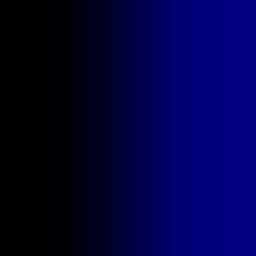
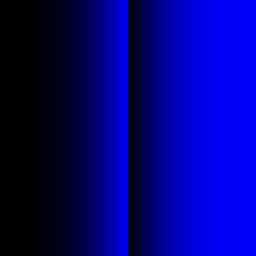
every piece in the collection is generated from combinations of four parameters. each property is a tuple of color, distribution, rotation, and multiplier.
color
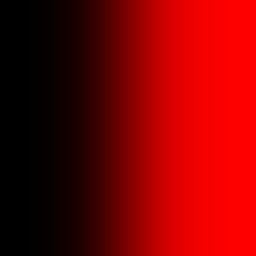
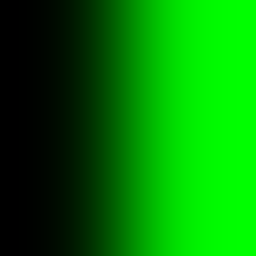
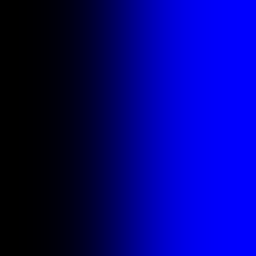
red, green, and blue. the three 8-bit channels, 0 to 255.
distribution
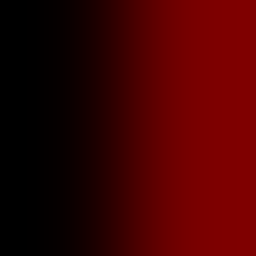
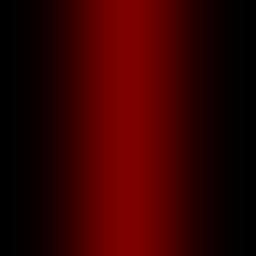
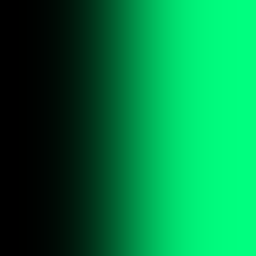
how color values are spread across the image. cumulative (cdf) produces smooth gradients; normal produces a concentrated bell-curve peak.
rotation
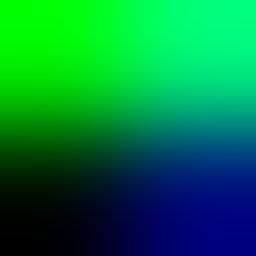
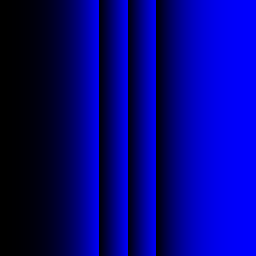
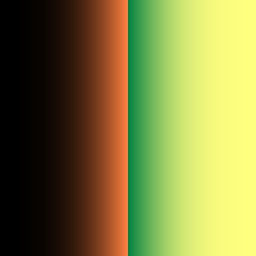
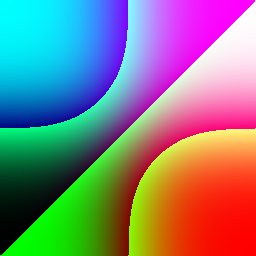
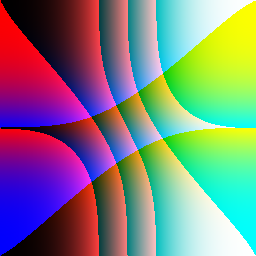
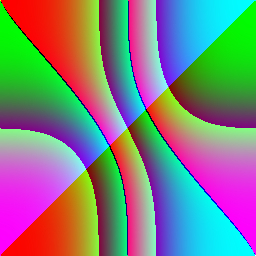
each property layer can be rotated: 0°, 90°, 180°, or 270°. when multiple layers are stacked at different rotations, interference patterns emerge.
multiplier
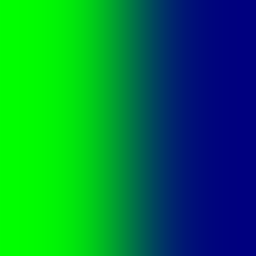
the distribution curve is scaled by an unsigned integer (0.5, 1, 2, or 4). when the scaled value exceeds 255 it rolls over in 8-bit unsigned integer space, creating repetitions and interference in the gradient.
stacking
each piece can have up to six property layers. the genesis piece (#00000) has none, a blank canvas holding only the code. as layers stack, simple gradients become complex color fields through additive blending.
the collection
the four parameters produce 50,063,860 possible combinations. nine elimination rules filter these down to 31,119. the final collection.
- property combinations must be unique
- sum of multipliers must be under 11.5
- half-color (×0.5) multiplier restrictions
- maximum two ×0.5 multipliers per combination
- one ×0.5 multiplier per channel maximum
- removal of non-sensible images
- elimination of rotational symmetry
- elimination of mirror symmetry
- removal of visually identical permutations
what remains is a curated set. not random generation, but a deliberate filtering of the possibility space. every piece that exists has earned its place by being distinct.
scarcity
the elimination rules create a non-uniform distribution. most pieces have four or five properties; single-property pieces are exceedingly rare (only 15 exist), and six-property pieces are uncommon.
| properties | count |
|---|---|
| 0 | 1 |
| 1 | 15 |
| 2 | 246 |
| 3 | 2,164 |
| 4 | 9,553 |
| 5 | 14,575 |
| 6 | 4,565 |
beyond vertical scarcity (number of properties), there is horizontal scarcity. the value created when pieces are paired together. a composition of unsigs can produce something greater than any individual piece.
the goal
"produce a collection of pieces which begin a conversation around what the potential for this medium is"
unsigned_algorithms is not an attempt to answer the question of what on-chain art should be. it is an attempt to start asking it.
the artist
unsigned_algorithms is the work of alexander watanabe, formally trained as an architect, self-taught programmer and failed writer.
links & articles
- unsig.info community knowledge base exploring the collection — tools, guides, and analysis by patrons
- an invitation to ask better questions essay by aether cavendish on the philosophy behind the collection
- the marvelous case of unsigned_algorithms deep dive into the project as "the most ambitious nft project on cardano"
- cardano nft: unsigned_algorithms feature and interview in the cryptonomist
- source code the generation code and notebooks on github
- @unsigned_algo official account on x / twitter